
<< English entry below >>
日本 vs カザフスタン戦 ~厳しい現実を突きつけられた一戦~
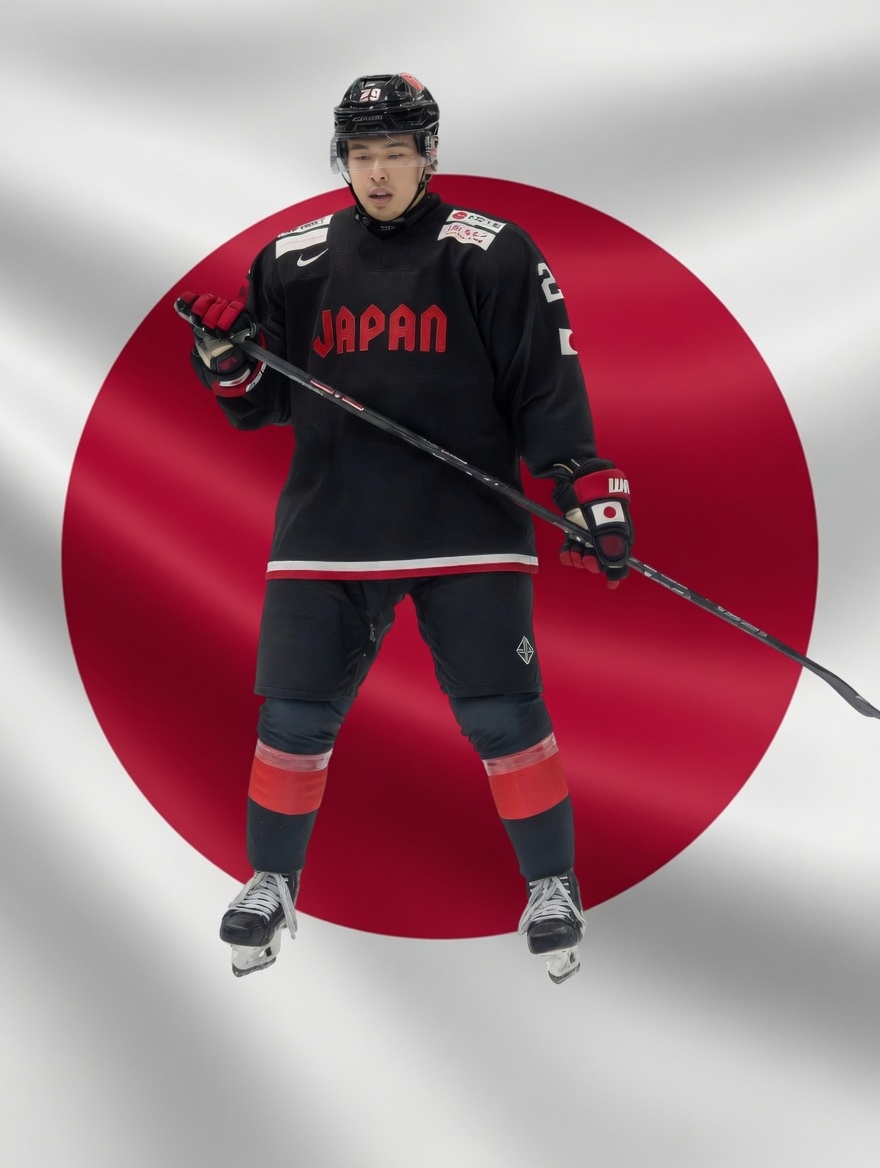
日本は29番の大塚選手がゴールマスクを被り、カザフスタンは1番のニキータ・ボヤルキンが先発しました。
何度かオフェンシブゾーンにパックを運ぶ場面はあったものの、前半はほぼ守備に回ってしまいます。
KHL経験を持つ佐藤選手が日本で最初のシュートを放ちましたが、ボヤルキン選手のグローブセーブに阻まれます。
カザフスタンのフィジカルなプレーが目立ちましたが、日本は十分に対応できていました。
15分19秒にカザフスタンの3番ディミートリ・ブレウスがインターフェアリングのペナルティ。
日本にこの試合初のパワープレーが訪れましたが、目立った成果は上げられませんでした。
日本もゴールをずらす場面があり、ピリオド終了32秒前には中島選手がフッキングのペナルティを取られ、カザフスタンにパワープレーのチャンスを与えました。
日本シュート9本、カザフスタン16本
フェイスオフ勝率 日本35%
第2ピリオド
カザフスタンのパス回しを1分ほど耐え、ゴール前での小競り合いをしのいで無失点でキルに成功しました。
しかし直後、13番ディンムカメド・カイルザンが先制点を決めます(アシスト:15番ガティヤトフ、21番オミルベコフ)。
その後も日本のアイシングが続き、フェイスオフからチャンスを与えてしまい、28番アングサール・シャイクメデノフ選手が2点目を追加。
第2ピリオド終了:0-3
カザフスタン優勢(シュート16-3、フェイスオフ60%)
第3ピリオド
三浦選手がフィジカルなプレーで奮闘しましたが、流れを変えられず…。
そのパワープレーでアセトフ選手が4点目を決め、続く2分後にはキャプテンの17番ローマン・スターチェンコ選手が5点目をスコア。
前回フランス戦と同じく、試合終盤に失速する傾向がまた出てしまいました(フランス戦ではラスト5分で2失点、今回はラスト7分で3失点)。
5月5日 次戦 vs ポーランド
次戦 vs リトアニア戦展望
去年D1Bから昇格してきたばかりで、これまでの2試合(カザフスタン戦とウクライナ戦)ではいずれも敗戦。
所属リーグのレベルはアジアリーグと同等かそれ以下と言われており、日本にとっては勝っておきたい相手です。
これまで日本はフィジカルな相手にも対応できてきましたが、今回は「集中力を切らさないこと」が鍵になります。
名古屋にお住まいの方は、十文字 陽亮さんの試合観戦パーティーもあるそうです。

English ——————————————————————
Japan vs Kazakhstan IIHF Hockey Match
By Beatrice Stefanelli (aka Bee)
Last night, Japan faced Kazakhstan (from Borat).
This meeting was projected to be the toughest match for Japan in this championship, and it certainly delivered.
Japan started 29 Otsuka in goal, and Kazakhstan started 1 Nikita Boyarkin.
First Period
Once again, Japan spent the first three minutes of the period in their own zone.
They finally chipped the puck up to the offensive zone once or twice, but largely spent the first half of this period on defense.
Otsuka made fantastic saves, and both Halliday and Murakami were showing up defensively.
Sato, the only player on Team Japan with KHL experience, made the first shot on Kazakhstan, which was glove-saved by Boyarkin.
Soon after, Kazakhstan dislodged their goal, leading to a stoppage.
Play continued back and forth, with no significant happenings.
Kazakhstan plays a physical game, and this first period proved that Japan could absolutely handle it.
At 15:19, number 3, Dmitri Breus, drew an interference penalty; this would be Japan’s first power play of the game.
Kazakhstan killed the penalty.
Japan managed to also dislodge their goal.
With just 32 seconds left in the period, Nakajima drew a penalty for hooking, giving Kazakhstan their first power play.
At the end of the first, the score was 0-0; Japan had 9 shots on goal to Kazakhstan’s 16, and had won 35% of faceoffs.
Second Period
Japan entered this period on the penalty kill.
Kazakhstan passed the puck back and forth in Japan’s zone for about a minute, with solid defense from Japan.
After a brief scuffle in front of the net, the puck was cleared by Japan, killing the penalty.
Soon after, though, number 13, Dinmukhamed Kaiyrzhan opened scoring for Kazakhstan, with assists from number 15, Artur Gatiyatov, and number 21, Alikhan Omirbekov.
Japan kept icing the puck, giving Kazakhstan more opportunities to score off the faceoff; they would capitalize on this for their second goal by number 28, Angsar Shaikhmeddenov, with an assist from Gatiyatov.
This period would prove very fruitful for Gatiyatov.
He notched his third assist off a goal at 13:13 from number 3, Dmitri Breus, also assisted by number 26, Alikhan Assetov.
Japan spent this period plagued by icing calls and drop passes to no one, handing Kazakhstan the chance to maintain control of the puck and take advantage of gaps in defense.
This period ended 0-3 Kazakhstan; Kazakhstan outshot Japan 16:3, and won 60% of faceoffs to Japan’s 40%.
Third Period
Japan opened this period weak, and Kazakhstan responded.
Miura had some good physical play, but Kazakhstan kept the pressure on.
At 6:33, Kazakhstan pulled their final penalty of the game; Assetov, tripping. Kazakhstan killed this penalty, and Japan pulled their own final penalty at 13:25; Murakami, holding. Kazakhstan would capitalize on this, with Assetov scoring to bring Kazakhstan’s count to 4.
Two minutes later, number 17, captain Roman Starchenko, would score with assists from number 18, Batyrlan Muratov, and number 24, Arkadiy Shestakov.
Not thirty seconds later, number 29, Kirill Lyapunov, would notch the final goal for Kazakhstan, with assists from Omirbekov and Kaiyrzhan.
Kazakhstan outshot Japan again 10:4, and won 66% of faceoffs.
The final score was 0-6, Kazakhstan.
This game was always going to be brutal, but this was definitely not Japan’s finest work.
It seems that their quality in play declines as they reach the end of games; on May 2 against France, they gave up two goals in the last five minutes of the game to lose in regular time.
In this game, they allowed three goals in the last seven minutes.
It seems clearer now what their strategy was in pulling Narisawa for the last ten minutes of the France game.
However, goalies cannot win hockey games alone, and Japan’s skaters must keep sharp throughout.
At least, the tough battles are over. The next three games should be more exciting.
May 5 game against Lithuania
Lithuania is the weakest team in the D1A championships; they promoted from D1B last year.
They have lost both of their previous matchups to Kazakhstan and Ukraine, though they did manage to score a single goal against Kazakhstan.
They have only scored two goals throughout the entire championship so far.
Lithuania’s players are from leagues equal to or below the level of the Asia League.
This game should be an easy win, but Japan cannot let up.
Lithuania’s players are bigger and more physical; Japan has been able to handle a physical game so far, but cannot afford to take a break in this one.
Japan should win.
If you have the opportunity, this game is best to watch with others.
Yosuke Jumonji has a watch party in Nagoya, if you’re in that area; or, the game is streaming on iihf.com.
Gather some friends, and cheer on Team Japan.
Go Japan Go!