<< English entry below >>
- デイブ・ココが語る—プロレス・スポーツ・横浜、そしてKocohamaが生まれるまで
- Dave Koco Talks Wrestling, Sports, Yokohama and the Journey Behind Kocohama on Cowboys and Kings
- Dave Koco’s journey ; From New Jersey to Japan
- Wrestling Was Always Part of the Story
- The Road to Sports Journalism
- The Birth of KocoSports
- Fighting for the KocoSports Name
- Dave Koco and Yokohama
- The American in the Middle
- The Streaming Problem
- A Creative Mind With a Few Strong Opinions
- More Than a Sports Story
- Dave Koco’s Story Is Still Being Written
デイブ・ココが語る—プロレス・スポーツ・横浜、そしてKocohamaが生まれるまで
Cowboys and Kings(カウボーイズ&キングス)はKJ Cowboy Dan・Kingstyle・そしてゲストのデイブ・ココ(KocoSports)が、プロレス・アニメ・スポーツ・個人的なストーリーを語り合うライブポッドキャスト形式の番組です。
文化・メディア・クリエイティブなキャリアについて語り合いながら、ポップカルチャー・業界関係者へのインタビュー・配信・執筆・クリエイティブな仕事の難しさなど幅広いテーマを扱っています。
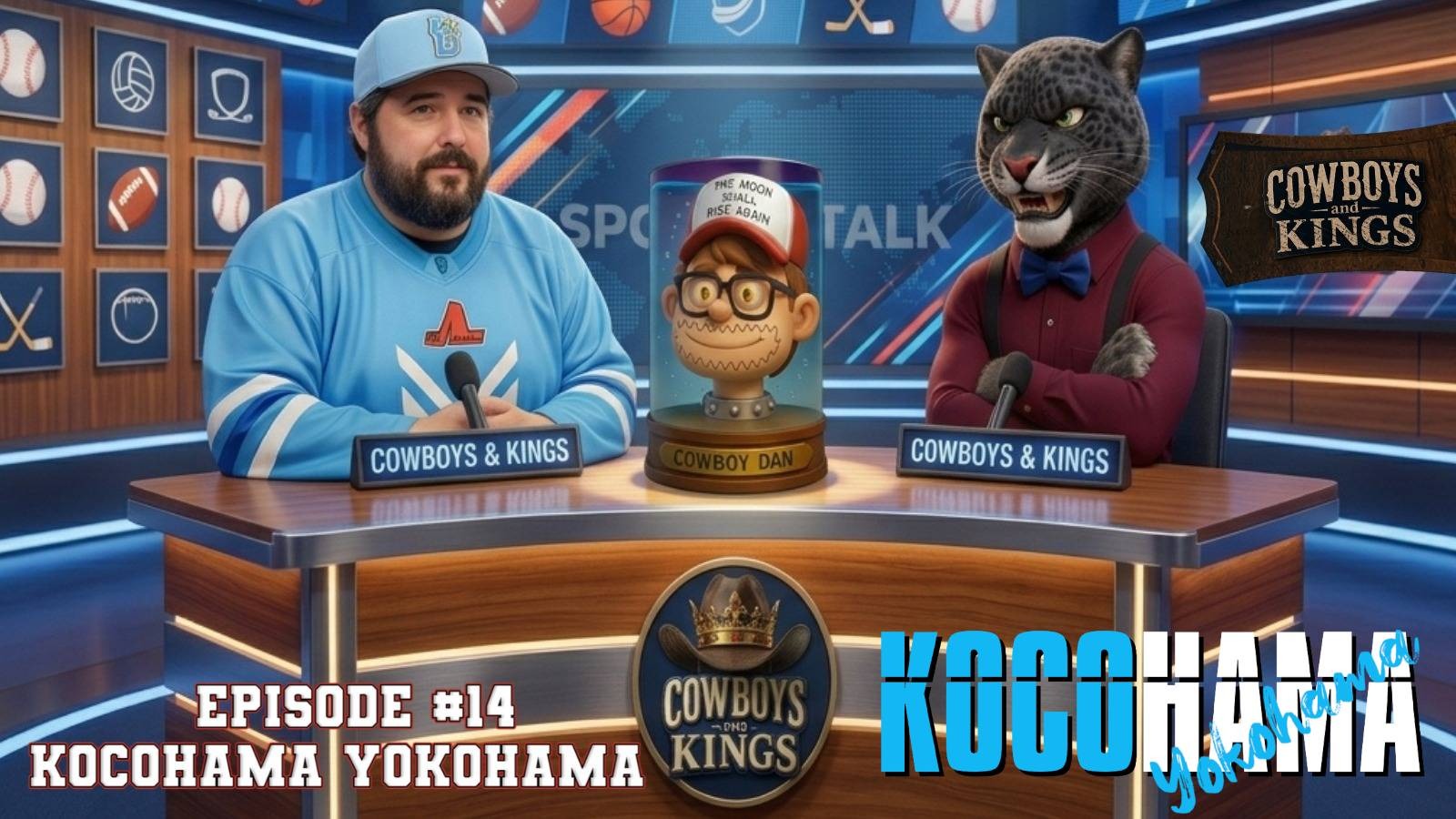
Cowboys & Kings エピソード#14 — Kocohama Yokohama
デイブ・ココにとってこの出演は、単なるプロレスやスポーツの雑談以上のものになりました。
ニュージャージーから海兵隊、スポーツジャーナリズム、インターネット配信の黎明期、そして今日のKocohamaへとつながる異色の道のりを振り返る機会となったのです。
デイブ・ココらしく、プロレスの話・冗談・持論・予想外の脱線が随所に飛び出す、楽しい内容になっていました。
ニュージャージーから日本へ
デイブ・ココはニュージャージーで育った頃のことを率直に語り、その経験が今の自分をどう形作ったかについて話しました。
その中で登場したのが「トミーおじさん」。
Kocoは彼を「型破りな先輩」と表現しています。
トミーおじさんにまつわるエピソードはインタビューの中で最も信じられないような経験の数々でしたが、その笑いの裏には大切なメッセージがありました。
出会った人々と経験した出来事が今の自分を作ったと、Kocoは信じているのです。
こうした経験はすでに執筆の形でも結実しています。
自身の著書「孤児ラッキー(ラッキー・ザ・オーファン)」について語り、続編となる作品の計画についても触れていました。
プロレスは常にストーリーの一部
1980〜90年代のニュージャージーで育ったKocoにとって、プロレスはスポーツと切り離して考えるものではありませんでした。
プロレスはスポーツ文化の一部だったのです。
WWF・WCW・AWA・USWA、そしてECWまで何でも見ていましたが、中でもWCWは特別な存在でした。
プロレスをよりシリアスなものとして見せていたこと、そして日本のプロレスとの繋がりがあったからです。
その影響が後に、日本のプロレスとの深い関わりへとつながっていきます。
何年も経ってから、ココは週に何回も日本のプロレス会場に足を運ぶようになりました。
初めての生観戦は巨大なスタジアム大会ではありませんでした。
観客がおよそ100人という小さなインディー大会で、それでも完全に度肝を抜かれたと振り返っています。
大きな会場での体験は、海兵隊を経た後まで待つことになります。
子どもの頃はテレビ観戦が中心でした。
後にプロレスのレポーターになるいとこと一緒に、PPVを見るためにありとあらゆる手段でお金を稼ぎました。
芝刈りをして、小銭を稼いで、その時代の大きな大会を観るためにお金をかき集めていたのです。
その子どもの頃の情熱が、やがてココのプロとしての生活の一部となっていきます。
スポーツジャーナリズムへの道
デイブ・ココの職業人生はKocohamaから始まったわけではありません。
海兵隊を除隊した後、GIビルを使って学校に通いました。
もともとライターを目指していたため、ジャーナリズムの授業がスポーツ報道への道を開いてくれたと話します。
そのキャリアはやがてタンパへと連れていき、プロスポーツの取材を担当することになりました。
タンパベイ・レイズ・タンパベイ・ライトニング・タンパベイ・バッカニアーズを担当し、ライトニングの初のスタンレーカップ制覇やバッカニアーズの優勝など、タンパスポーツ史の重要な瞬間に立ち会いました。
レイズについても愛着を語り、チーム創設当初からのファンだと言います。
最も誇りに思う瞬間の一つが、レイズのワールドシリーズ進出時に発した一言です。
「人生は公平じゃない。でも時々、野球は公平だ。」
この言葉はレイズのハイライト映像でも使われ、チームの歴史的な記録に彼の声が残ることになりました。
クリアウォーター・スレッシャーズの初代アナウンサーを務め、タンパのスポーツバー「Ferg’s Sports Bar and Grill」での仕事も語っています。
従来の道を歩んでこなかった子どもが、優勝チームを取材するスポーツ記者になったのは、並大抵の達成ではありません。
KocoSportsの誕生
今日Kocohamaとして知られるものの原点は、はるか古い時代にあります。
デイブ・ココは元々日本で会社を立ち上げ、それがプロレス・スポーツエンターテインメント・マーケティング・メディアを扱う存在へと成長したと説明します。
でも最初からそうだったわけではありません。
始まりは翻訳会社でした。
従来の雑誌制作は作業量に対して収益が見合わないと判断し、日本のスポーツニュースの翻訳・配信へとシフト。
そこからメディア・マーケティング・スポーツ・プロレス・エンターテインメントの取材へと広がっていきました。
SNS・YouTube・現代の配信プラットフォームが当たり前になるずっと前から、ココはインターネットメディアの実験をしていました。
実はNetflixが今の形になる前に、すでに配信ネットワークを持っていたというから驚きです。
問題は技術ではなく、「パソコンでテレビが見られる」ということを人々に信じてもらうことでした。
今では信じられないような話ですが、彼がいかに時代を先取りしていたかが伝わります。
KocoSportsという名前を守るための戦い
「KocoSports」という名前にも、それ自体の物語があります。
この名前には複数の意味があり、やがて格闘技と結びつくようになりましたが、実はオクラホマ州の別の事業者と名称をめぐる法的紛争が発生しました。
デイブ・ココは自ら弁護士なしで裁判を戦い、審理のためにオクラホマまで飛びました。
裁判官への主張は要するに、「KocoSportsはすでに何年も前から存在し、拠点は日本、スポーツを国際的に取り上げており、オクラホマとは一切関係がない」というものでした。
裁判官は最終的にKocoに名前の使用を認めました。
デイブ・ココと横浜
この対談では、横浜がどれほどKocoのアイデンティティの一部になっているかも伝わってきました。
ホストが横浜のスポーツを話題にすると、Kocoは試合観戦や日本のスポーツ文化を体験することへの熱い思いを語りました。
特に横浜F・マリノスの試合についての話が印象的でした。
サッカーは子どもの頃から親しんできたスポーツではなかったけれど、日本のサポーターの中にいることで新たな感動を覚えるようになったと言います。
雨の中でも歌い続け、揺れ続けるファンの姿を描写していました。
Kocoにとって、時にはファンの方が試合そのものと同じくらい楽しいことさえあるようです。
この熱意はサッカーにとどまりません。
ラグビーへの興味も語り、横浜キヤノンイーグルスにも注目していると話しました。
日本のスポーツ文化について特に興味深い観察を披露してくれました。
日本人は一つの趣味に対して驚くほど熱中できる、という点です。
長時間労働が多いからこそ、好きなものを見つけた時に全力で打ち込む—その情熱をココは心から尊重しています。
二つの文化の狭間で
日本で生活・仕事をしてきたことで、Kocoは独自の視点を身につけました。
アメリカと日本、二つの文化の間に立つ存在として、ビジネスやエンターテインメントの文化的違いをナビゲートしてきた経験を語りました。
その経験はプロレスの世界で特に価値を持ちました。
日本の有名プロレスラーたちと交流し、日本でこの業界がいかに真剣に扱われているかを目の当たりにしたと言います。
スタン・ハンセンなど日本で絶大な人気を誇った伝説的なアメリカ人レスラーについても触れ、その地位を現代のケニー・オメガが達成したスーパースターとしての立場に例えていました。
これもまた、長年にわたってアメリカと日本のスポーツ文化を行き来してきた人ならではの視点です。
配信サービスの問題
このポッドキャストでは現代の配信業界についても語っています。
インターネットメディアに長年携わってきた人間として、業界の劇的な変化を見続けてきました。
ある時期には月に約200ドルを配信サービスに費やしていたと打ち明け、最終的にすべてをキャンセルして休憩を取ることにしたと話します。
問題はエンターテインメントが足りないことではなく、トピックが多すぎることでした。
数多くのサービスが独占コンテンツを争う中、消費者は本当に何十もの契約が必要なのかと疑問を呈しました。
かつてのPPVモデルがいつか復活するかもしれないとジョークを飛ばしていましたが、それも的外れではないかもしれません。
Netflixが台頭する前から配信を実験していた人物ならではの、業界への深い洞察です。
強い意見を持つクリエイティブな頭脳
このインタビューで浮かび上がったもう一つのこと—デイブ・ココは自分が何を大切にしているかを明確に知っているということです。
執筆・スポーツ・プロレスに対して非常に情熱的である一方、ポップカルチャーの多くの分野にはそこまで興味がないと率直に認めていました。
音楽もその一つです。
テイラー・スウィフトの巨大な人気にもかかわらず、顔も知らないというジョークを飛ばしていました。
笑える話ですが、これはココのメディアへのアプローチを物語っています。
人気だからといって何でも追いかけるのではなく、本当に興味のあるものを追いかけ、その情熱を仕事に込める—それが彼のスタイルです。
スポーツの枠を超えた物語
Cowboys and Kingsのインタビューが特に面白い理由は、ココの物語が一つのカテゴリに収まらないことにあります。
海兵隊員として。
ライターとして。
スポーツ記者として。
プロレスファンとして。
メディア起業家として。
配信者として。
翻訳者として。
そして今、Kocohamaを通じて横浜のスポーツとエンターテインメントの物語を伝え続ける存在として。
このポッドキャストが示しているのは、これらが別々の章ではないということです。
すべてがつながっています。
ニュージャージーでプロレスを見ていた少年が、やがて日本に渡り日本のプロレスに深く入り込んでいきました。
ライターを志した青年がスポーツ記者になり、スポーツ記者がインターネットメディアのパイオニアになり、その経験が今日のKocohamaの土台を作りました。
デイブ・ココの物語はまだ途中
この対談の最大のポイントは、デイブ・ココの旅に終わりが見えないということかもしれません。
以前のビジネスを売却してそのキャリアに一区切りをつけた後、そのまま引退することもできたはずです。でもKocoは、また始めました。
Kocohamaは、これまでの人生をかけてやってきたこと—執筆・スポーツ・プロレス・エンターテインメント・メディア・文化をつなぐこと—を一つに結集しながら、今や「我が家」と呼べる横浜という街にフォーカスするサイトとなっています。
Cowboys and Kingsが証明したように、デイブ・ココという名前の裏にはたくさんの物語があります。
そしてこのインタビューを見れば分かるように、語るべき物語はまだまだ尽きません。
English ———————————————————————
Dave Koco Talks Wrestling, Sports, Yokohama and the Journey Behind Kocohama on Cowboys and Kings
Cowboys and Kings is a live podcast-style show where hosts KJ Cowboy Dan, Kingstyle, and guest Dave Koco aka KocoSports from Kocohama.com discuss wrestling, anime, sports, and personal stories, sharing insights on culture, media, and creative careers.
They cover pop culture, interview industry insiders, talk about streaming, writing, and the challenges of creative work.
Cowboys & Kings: Episode #14 – Kocohama Yokohama
For Dave Koco, the appearance was more than another conversation about wrestling and sports.
It became a look back at the unusual path that took him from New Jersey to the Marine Corps, sports journalism, the early days of internet streaming, and eventually building what would become Kocohama.
And, as you would expect from Koco, there were plenty of wrestling stories, jokes, opinions and unexpected detours along the way.
Dave Koco’s journey ; From New Jersey to Japan
Koco talked openly about growing up in New Jersey and how those experiences shaped him.
One of those people was his Uncle Tommy, whom Koco described as an unconventional mentor.
The stories about Uncle Tommy were some of the wildest moments of the interview, but underneath the humor was an important point: Koco believes the people he met and the experiences he survived helped shape the person he became.
Koco has even turned those experiences into writing. He discussed his book Lucky the Orphan and his plans to continue that story with additional books.
Wrestling Was Always Part of the Story
Growing up in New Jersey during the 1980s and 1990s, Koco didn’t necessarily see professional wrestling as something completely separate from sports.
Wrestling was simply part of the sports culture.
He remembered watching everything from WWF and WCW to AWA, USWA and eventually ECW.
While he watched it all, WCW had a special place for him because he felt it presented wrestling as something more serious and because of its connections with Japanese wrestling.
That exposure would eventually help lead him toward a much deeper relationship with Japanese professional wrestling.
Years later, Koco would find himself attending Japanese wrestling events multiple times a week.
His first live wrestling experience wasn’t some giant stadium show, either.
Koco recalled attending a small independent event with perhaps 100 people in attendance and being blown away by the experience.
Big wrestling events wouldn’t come until after his time in the Marine Corps, when he was older.
As a kid, however, wrestling was something he consumed on television.
He and a cousin who would eventually become a wrestling reporter went to extraordinary lengths to afford pay-per-views.
They cut lawns, hustled for money and did whatever they could to scrape together enough cash to watch the major wrestling events of the era.
That childhood passion eventually became part of Koco’s professional life.
The Road to Sports Journalism
Koco’s professional journey didn’t begin with Kocohama.
After serving in the Marine Corps, he used the GI Bill to attend school.
His original goal was to become a writer, and a journalism class helped put him on the path toward sports journalism.
That career eventually took him to Tampa, where he covered professional sports.
Koco recalled covering the Tampa Bay Rays, Tampa Bay Lightning and Tampa Bay Buccaneers.
He was there for some major moments in Tampa sports history, including the Lightning’s first Stanley Cup championship and the Buccaneers’ championship run.
He also talked about his connection to the Rays, calling himself a fan from the team’s beginning.
One of his proudest moments came from a line he delivered during the Rays’ run to the World Series:
“Life isn’t fair, but sometimes baseball is.”
Koco explained that the line was used in Rays highlight packages, meaning his voice remains part of the team’s historical coverage.
He also mentioned being the original voice of the Clearwater Threshers and doing work for a Tampa sports bar named Ferg’s Sports Bar and Grill.
For someone whose childhood didn’t exactly follow a traditional path, becoming a sports reporter covering championship teams was a remarkable achievement.
The Birth of KocoSports
One of the most interesting parts of the conversation was hearing Koco explain how his professional media career developed.
What many people know today as Kocohama has roots in a much older business.
Koco explained that he originally started a company in Japan that eventually became known for wrestling, sports entertainment, marketing and media. But it didn’t begin that way.
It started as a translation company.
Koco described moving away from producing a traditional magazine because the workload was enormous compared with the financial return.
Instead, the company began translating and distributing Japanese sports news.
From there, it expanded into media, marketing and coverage of sports, wrestling and entertainment.
That evolution is an important part of Koco’s story.
Long before social media, YouTube and modern streaming platforms became the standard, Koco was already experimenting with internet-based media.
In fact, he explained that his company had a streaming network before Netflix became what it is today.
The problem wasn’t necessarily technology.
The problem was convincing people that they could actually watch television on their computers.
That sounds almost unbelievable today, but it shows just how early Koco was experimenting with online media.
Fighting for the KocoSports Name
Even the name KocoSports has its own story.
Koco explained that the name had multiple meanings and eventually became associated with combat sports.
But the company actually ended up in a legal dispute with another entity in Oklahoma over the name.
Koco represented himself in the case and flew to Oklahoma for the hearing.
His explanation to the judge was essentially that KocoSports had already been operating for years, was based in Japan, covered sports internationally and had no connection to Oklahoma.
The judge ultimately allowed Koco to keep the name.
Dave Koco and Yokohama
The conversation also showed just how much Yokohama has become part of Koco’s identity.
When the hosts brought up Yokohama sports, Koco spoke enthusiastically about attending games and experiencing Japanese sports culture.
He particularly talked about attending Yokohama F. Marinos matches.
Koco admitted that soccer wasn’t something he grew up with, but being around Japanese supporters has given him a new appreciation for the sport.
He described fans singing and bouncing throughout matches, even during terrible weather.
For Koco, sometimes the fans can be almost as entertaining as the game itself.
That enthusiasm extends beyond soccer. He also talked about getting into rugby and following the Yokohama Canon Eagles.
One of Koco’s observations about Japanese sports culture was especially interesting: Japanese fans can become incredibly dedicated to a single hobby.
Because many people work extremely long hours, Koco believes that when they find something they love, they go all in.
That passion is something he clearly appreciates.
The American in the Middle
Living and working in Japan has also given Koco a unique perspective.
He talked about being the American in the middle of two different cultures.
Working in Japan meant navigating the differences between American and Japanese business and entertainment culture.
That experience became particularly valuable in wrestling.
Koco discussed meeting major Japanese wrestling stars and seeing firsthand how seriously the industry is treated in Japan.
He also talked about legendary American wrestlers who became enormous stars in Japan, including Stan Hansen.
Koco compared Hansen’s popularity in Japan to the kind of superstar status Kenny Omega has achieved in the modern era.
It’s a perspective that comes naturally to someone who has spent years moving between American and Japanese sports cultures.
The Streaming Problem
Koco also had plenty to say about the modern streaming world.
After years of being involved in internet media, he has watched the industry change dramatically.
At one point, Koco said he was spending around $200 a month on streaming services before deciding to cancel them and take a break.
His problem wasn’t a lack of entertainment.
It was having too much of it.
With so many services competing for exclusive shows, Koco questioned whether consumers really need dozens of subscriptions just to follow the programs they enjoy.
He even joked that the old pay-per-view model might eventually make sense again because consumers are now paying for so many different streaming platforms.
For someone who was experimenting with streaming before Netflix became dominant, Koco has a particularly interesting perspective on how far the industry has come.
A Creative Mind With a Few Strong Opinions
The interview also showed something else about Koco: he knows exactly what he cares about.
Koco explained that he is extremely passionate about certain subjects — particularly writing, sports and professional wrestling — while admitting that there are plenty of areas of popular culture where he simply isn’t very interested.
That includes music.
He joked about not even knowing what Taylor Swift looks like despite her enormous popularity.
It’s a funny story, but it also explains something about Koco’s approach to the media.
He isn’t trying to consume everything simply because it’s popular. He follows the subjects that genuinely interest him and brings that passion into his work.
More Than a Sports Story
What makes the Cowboys and Kings interview particularly interesting is that Koco’s story doesn’t fit neatly into one category.
He’s been a Marine.
A writer.
A sports reporter.
A wrestling fan.
A media entrepreneur.
A streamer.
A translator.
And now, through Kocohama, he’s continuing to tell stories about Yokohama sports and entertainment.
The podcast makes it clear that these aren’t separate chapters. They all connect.
The kid watching wrestling in New Jersey eventually became someone who traveled to Japan and immersed himself in Japanese wrestling.
The aspiring writer became a sports reporter.
The sports reporter became an internet media pioneer.
And that experience eventually helped create the foundation for what Kocohama is today.
Dave Koco’s Story Is Still Being Written
Perhaps the biggest takeaway from the conversation is that Dave Koco’s journey doesn’t really have a traditional ending.
After selling his previous businesses and stepping away from that chapter of his career, he could have simply walked away.
Instead, he started again.
Kocohama gives Koco a chance to combine many of the things he has spent his life doing — writing, sports, wrestling, entertainment, media and connecting cultures — while focusing on the city he has come to call home.
As Cowboys and Kings demonstrated, there are plenty of stories behind the name Dave Koco.
And if this interview is any indication, he’s still got plenty more stories to tell.