<< English entry below >>
- 「孤児ラッキー」、ラッキー・ザ・オーファン —孤独じゃない、孤児の物語
- Lucky the Orphan: A Journey Through Childhood, Friendship, and Finding Family
- Welcome to the 1980s
- Lucky’s Difficult Life
- Friendship Becomes Family
- The Magic of Christmas
- Nintendo, Video Games, and Professional Wrestling
- A Very Different Book From Operation Freakshow
- The Heart of the Story
- From the Authors of Operation Freakshow
- Lucky the Orphan : The Audiobook
- Why Read Lucky the Orphan?
- Dave Koco’s Final Thoughts
「孤児ラッキー」、ラッキー・ザ・オーファン —孤独じゃない、孤児の物語
孤児の物語が、必ずしも「孤独な話」とは限りません。
レイ・フィッシャーとデイブ・Kocoが共著した**「ラッキー・ザ・オーファン」**は、1980年代の孤児院を舞台に、13歳の少年が過酷な環境を生き抜こうとする青春成長小説です。
でもこれは単なる苦難の物語ではありません。
友情の物語です。希望の物語です。そして何より、思いもよらない場所で「家族」を見つける物語です。
1980年代という舞台
この作品が特別なのは、その時代設定にあります。
物語の舞台は1980年代の孤児院。
子どもたちの娯楽が今とはまったく違っていた時代です。ラッキーの世界にはニンテンドー・テレビゲーム・サンタクロース・プロレスが溢れています。
これらは単なる懐かしいアイテムではありません。
つらい状況の中でも、子どもが幸せな瞬間を見つけられることを示す大切な要素です。
1980年代に育った読者にとっては、あの頃の子どもだった自分を思い出させてくれます。
若い読者にとっては、スマートフォンもSNSも存在しなかった時代の子ども時代を垣間見ることができます。
孤児ラッキーの過酷な日常
13歳のラッキーが直面している状況は、誰にとっても簡単ではありません。
孤児院での生活は甘くない。厳格な修道女・荒っぽい仲間たち・自分が本当に居場所を感じられない環境—毎日がサバイバルです。
でもラッキーは、そんな状況に完全に飲み込まれることを拒みます。それこそがこの物語の核心です。
友情が家族になる
「孤児ラッキー(ラッキー・ザ・オーファン)」の中心にあるテーマは友情です。
ラッキーはつらい日々を乗り越えるために、他の子どもたちと絆を結んでいきます。
そしてやがてその友情は、もっと大きな何かへと育っていきます。
血のつながりのない、でも本物の家族へ。
家族とは必ずしも血でつながった人たちのことではありません。
困難な時に隣に立ってくれる人。最悪な日に笑わせてくれる人。
そして、一人で全てを抱えさせないでいてくれる人。それが家族なのかもしれません。
クリスマスの魔法
クリスマスはラッキーの物語において重要な役割を果たしています。
すべての経験を経てもなお、ラッキーはサンタクロースの奇跡を信じ、「良い子リスト」に載ることを願い続けます。
孤児院で暮らす子どもにとって、その信念はプレゼントをもらうこと以上の意味を持ちます。
それは希望そのものです。
何か良いことが起きるかもしれない——その感覚こそが、ラッキーを応援したくなる理由の一つです。
世界が希望を持つ理由をほとんど与えてくれなくても、ラッキーはより良い何かを求め続けます。
ファミコン・テレビゲーム・プロレス
僕がこの作品で特に楽しいと感じるのが、1980年代の子どもたちが熱中していたものがストーリーに自然に溶け込んでいる点です。
ニンテンドー。テレビゲーム。プロレス。
これらは単なる背景ではなく、ラッキーの世界の一部です。
1980年代に育った人なら分かるはず—これらがどれほど子どもにとって大きな意味を持っていたかを。
ゲームは現実逃避の手段になり得た。
プロレスの試合はその週最大のイベントになり得た。
そしてクリスマスの朝は、一年で最も大切な日になり得た。
ラッキーにとって、こうした趣味は「ただの子ども」でいられる瞬間をもたらしてくれます。
「オペレーション・フリークショウ」とは全く違う作品
「オペレーション・フリークショウ」のファンには、「ラッキー・ザ・オーファン」は意外に感じるかもしれません。
同じ著者コンビによる作品ですが、まったく異なる物語です。
オペレーション・フリークショウは自警団・暴力・ルチャマスク・私的制裁の結末をめぐる、ダークなスリラーでした。
一方「ラッキー・ザ・オーファン」はずっと個人的な作品です。
大人が自警団になったらどうなるかを問うのではなく、もっとシンプルで——ある意味ずっと難しい——問いを投げかけます。
「人生に最悪の手を配られた子どもは、どうやって幸せを見つけるのか?」
その答えは、友情・想像力・希望・小さな幸せを見つける力の中にあります。
この物語の核心
「ラッキー・ザ・オーファン」の根底にあるのは、不屈の精神です。
ラッキーの子ども時代は楽ではありません。
子どもが持つべきものを、すべて持っているわけでもありません。でも彼は前に進む理由を探し続けます。
友達を作り、夢を見て、ゲームをして、プロレスを楽しんで、サンタクロースを信じて、与えられた状況の中でベストを尽くす。
だからこそ、単なる「孤児の物語」以上のものになっています。
困難な状況の中に光を見つけようとする、人間の力についての物語です。
著者について
「孤児ラッキー(ラッキー・ザ・オーファン)」は「オペレーション・フリークショウ」に続くレイ・フィッシャーとデイブ・Kocoのコラボ作品です。
異なる背景を持つ2人の著者は、それぞれ異なる経路でいずれも日本に辿り着きました。
デイブ・Kocoはアメリカ出身の元海兵隊歩兵、レイ・フィッシャーはペンシルバニア州北東部・中央部出身でカリフォルニアで音楽を学んだ経歴を持ちます。
2作目は、いかに異なるストーリーテリングができるかを示した作品です。
アクション重視のスリラーではなく、子ども時代・友情・ノスタルジア・希望を軸にしたキャラクター重視の物語を生み出しました。
オーディオブックについて
「孤児ラッキー(ラッキー・ザ・オーファン)」はデイブ・スティシャン朗読のオーディオブックとしても聴けます。
アンブリッジド版の再生時間は約4時間2分。
物理書籍やデジタル書籍を開く時間がない方でも、ラッキーの物語を気軽に体験できます。
こんな人にオススメ
以下のものが好きな方にぜひ読んでほしい作品です。
- 1980年代ノスタルジア
- 青春成長小説
- プロレス
- ニンテンドー・クラシックゲーム
- 友情
- クリスマス
- 孤児院を舞台にした物語
- 子どもの不屈の精神
- 予想外の場所で家族を見つける物語
1980年代に育ち、ゲームやプロレスやテレビやおもちゃ、そしてクリスマスの興奮に満ちた子ども時代を過ごした方にとっては特別な作品です。
でもそのノスタルジアの下には、もっと普遍的な物語があります。
誰でも、どこかに「居場所」を求めている。ラッキーの旅は、その場所を探すことの物語です。
デイブ・ココより
レイ・フィッシャーと「ラッキー・ザ・オーファン」を書いた経験は、「オペレーション・フリークショウ」のそれとはまったく違うものでした。
最初の作品はずっとダークなコンセプトと全く異なる種類のアクションで成り立っていました。
「ラッキー」では、一人の子どもの物語を語る機会を得ました。世界を恨む理由がいくらでもあるのに、それでも笑う理由を見つける子ども。
多くのものを失ったのに、まだクリスマスを信じている子ども。
伝統的な家族を持たないのに、友情がときに家族になれることを発見する子ども。
それこそが、「孤児ラッキー(ラッキー・ザ・オーファン)」を記憶に値する物語にしているものだと思っています。
これは孤児であることの物語ではありません。ラッキーであることの物語です。
「ラッキー・ザ・オーファン」は、世界の中に自分の居場所を探す少年の物語です。そして時に、自分で選んだ家族が、生まれながらの家族と同じくらい大切なものになれることを教えてくれます。
English ——————————————————————–
Lucky the Orphan: A Journey Through Childhood, Friendship, and Finding Family
Not every story about an orphan is a story about being alone.
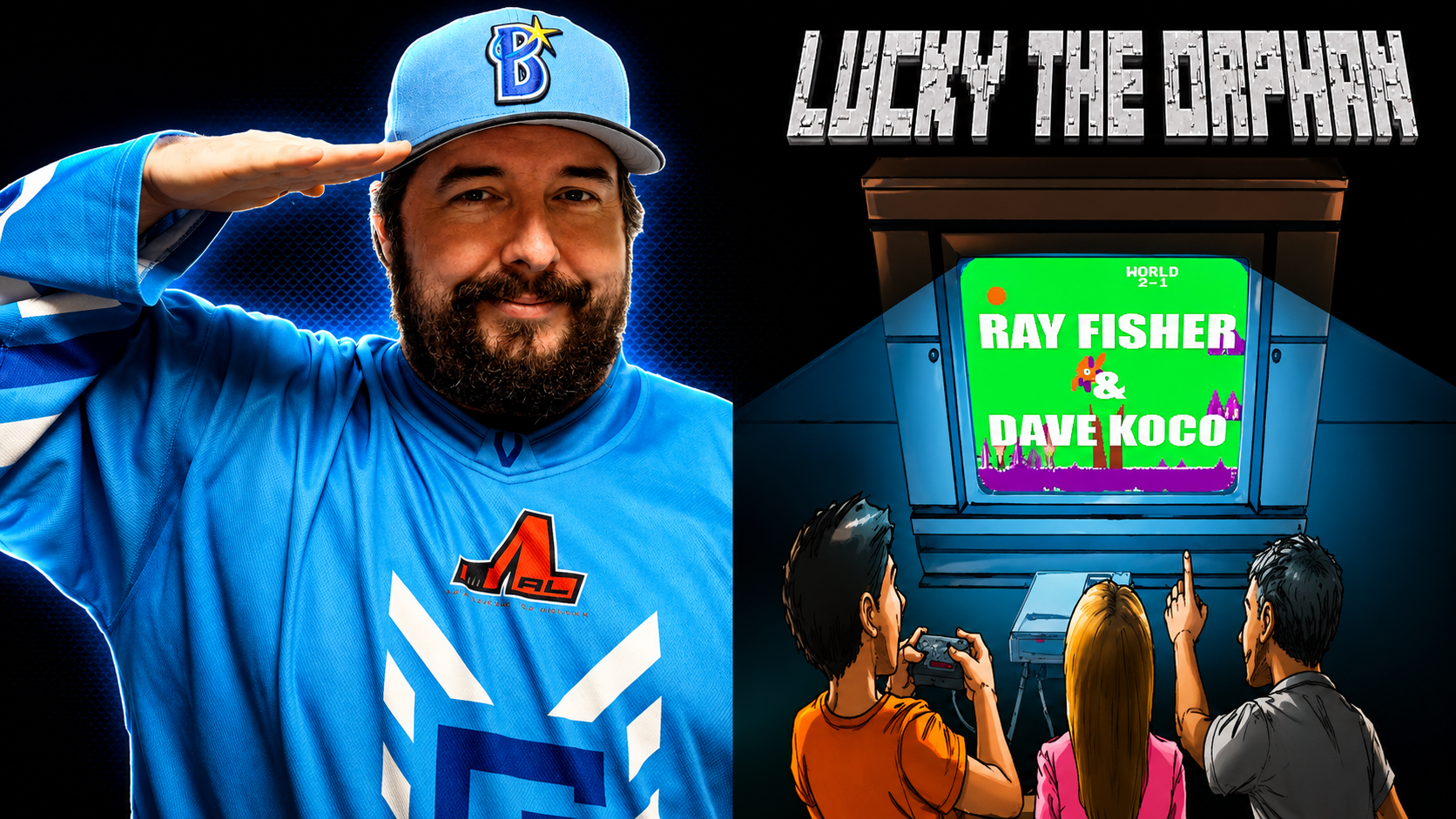
Lucky the Orphan, written by Ray Fisher and Dave Koco, is a coming-of-age novel that takes readers back to the 1980s and into the difficult world of a 13-year-old boy trying to survive life in an orphanage.
But this isn’t simply a story about hardship.
It’s a story about friendship.
It’s a story about hope.
And ultimately, it’s a story about finding a family in places you never expected.
Welcome to the 1980s
One of the things that makes Lucky the Orphan special is its setting.
The story takes place in an orphanage during the 1980s, a time when childhood entertainment looked very different from today.
For Lucky, the world includes things like Nintendo, video games, Santa Claus, and professional wrestling.
Those details aren’t just nostalgic references. They help show how a kid can find moments of happiness even when the circumstances around him aren’t exactly happy.
For readers who grew up during the 1980s, those elements can bring back memories of a very different era of childhood.
For younger readers, they offer a glimpse into what life was like before smartphones, social media, and today’s constantly connected world.
Lucky’s Difficult Life
At only 13 years old, Lucky is dealing with circumstances that would be difficult for anyone.
Life inside the orphanage isn’t easy. Lucky faces strict authority, difficult peers, and the everyday challenges of trying to survive in an environment where he doesn’t necessarily feel like he belongs.
The official description specifically highlights Lucky’s struggles with a strict nun and rough peers at the orphanage.
But Lucky refuses to let those circumstances completely define him.
That’s where the heart of the story comes from.
Friendship Becomes Family
One of the central ideas behind Lucky the Orphan is the importance of friendship.
Lucky develops relationships with other children who help him get through the difficult parts of his life.
Eventually, those friendships begin to resemble something much bigger.
A makeshift family.
That idea gives the novel its emotional core.
Family doesn’t always mean the people you’re related to by blood. Sometimes it’s the people who stand beside you when things are difficult. Sometimes it’s the friends who make you laugh when you’re having the worst day imaginable.
And sometimes, it’s the people who simply refuse to let you face everything alone.
The Magic of Christmas
Christmas plays an important role in Lucky’s story.
Despite everything he has experienced, Lucky continues to believe in the miracle of Santa Claus and hopes to make it onto Santa’s “nice list.”
For a kid living in an orphanage, that belief represents something much larger than presents.
It represents hope.
Lucky still has the ability to believe that something good might happen.
That sense of optimism is one of the things that makes the character so easy to root for.
Even when the world around him isn’t giving him many reasons to be optimistic, Lucky continues looking for something better.
Nintendo, Video Games, and Professional Wrestling
For me, one of the most fun aspects of Lucky the Orphan is how the story incorporates the things kids loved during the 1980s.
Nintendo.
Video games.
Professional wrestling.
These aren’t just background decorations. They’re part of Lucky’s world.
Anyone who grew up during the 1980s knows how powerful those things could be to a kid.
A video game could provide an escape.
A wrestling match could become the biggest event of the week.
And Christmas morning could feel like the most important day of the year.
For Lucky, those interests provide moments where he can simply be a kid.
A Very Different Book From Operation Freakshow
Fans of Operation Freakshow might be surprised by Lucky the Orphan.
The two books were written by the same author team, but they’re very different stories.
Operation Freakshow is a dark thriller involving vigilantes, violence, luchador masks, and the consequences of taking justice into your own hands.
Lucky the Orphan is much more personal.
Instead of asking what happens when adults decide to become vigilantes, Lucky the Orphan asks a much simpler—and arguably more difficult—question:
How does a kid find happiness when life has already dealt him a terrible hand?
The answer is friendship, imagination, hope, and the ability to find small moments of happiness.
The Heart of the Story
At its core, Lucky the Orphan is about resilience.
Lucky doesn’t have an easy childhood.
He doesn’t have everything a kid should have.
But he still finds reasons to keep going.
He makes friends.
He dreams.
He plays video games.
He enjoys professional wrestling.
He believes in Santa Claus.
And he tries to make the best of the situation he’s been given.
That’s what makes the story more than simply an “orphan story.”
It’s a story about the human ability to find light in a difficult situation.
From the Authors of Operation Freakshow
Lucky the Orphan was written by Ray Fisher and Dave Koco, following their work together on Operation Freakshow.
The authors have very different backgrounds, but both eventually found themselves living in Japan. The author’s description identifies David Koco as originally from the United States and a former Marine Corps infantryman, while Ray Fisher is from Northeastern/Central Pennsylvania and studied music in California.
Their second novel demonstrates just how differently the two authors could approach storytelling.
Instead of another action-heavy thriller, they created a character-driven story centered around childhood, friendship, nostalgia, and hope.
Lucky the Orphan : The Audiobook
Lucky the Orphan is also available as an audiobook, narrated by Dave Stishan.
The unabridged audiobook runs approximately 4 hours and 2 minutes.
That makes it a relatively quick listen for anyone who wants to experience Lucky’s story without sitting down with the physical or digital book.
Why Read Lucky the Orphan?
If you enjoy stories about:
-
1980s nostalgia
-
Coming-of-age stories
-
Professional wrestling
-
Nintendo and classic video games
-
Friendship
-
Christmas
-
Orphanage stories
-
Childhood resilience
-
Finding family in unexpected places
then Lucky the Orphan is worth checking out.
It’s especially interesting for anyone who grew up during the 1980s and remembers a childhood filled with video games, wrestling, television, toys, and the excitement of Christmas.
But underneath all that nostalgia is a much more universal story.
Everyone wants to belong somewhere.
Lucky’s journey is about finding that place.
Dave Koco’s Final Thoughts
Writing Lucky the Orphan with Ray Fisher was a very different experience from writing Operation Freakshow.
The first book was built around a much darker concept and a very different kind of action.
With Lucky, we had the opportunity to tell a story about a kid.
A kid who has every reason to be angry at the world, but still finds reasons to laugh.
A kid who has lost a lot, but still believes in Christmas.
A kid who doesn’t have a traditional family, but discovers that friendship can sometimes become family.
That’s what makes Lucky the Orphan a story worth remembering.
It isn’t really about being an orphan.
It’s about being Lucky.
About the Authors
Ray Fisher and Dave Koco are the writing team behind Lucky the Orphan and Operation Freakshow.
Lucky the Orphan was published by Hannacroix Creek Books and is available in ebook and audiobook formats.
The audiobook edition is narrated by Dave Stishan and is approximately 4 hours and 2 minutes long.
Interested in reading Lucky’s story?
Read Lucky the Orphan on Amazon
Lucky the Orphan is ultimately a story about a kid trying to find his place in the world—and discovering that sometimes the family you choose can be just as important as the family you’re born into.